Category Archives: Art and Craft of Writing

The Genesis Of My Next Sci-fi Novel

Just because I’m still rewriting Magellan’s Navigator doesn’t mean I’m not planning my next Sci-fi work.

First there comes the concept, the germ, the seed of an idea. Many book ideas surface in my head, but an idea takes a second  and writing a book takes months. So I must thin these seedling ideas, so the best can grow.

It all starts with what if?

What if the protagonist thinks they’re human, but they’re really an A.I., or maybe they are human, or something else entirely, like an alien. My reader will take this journey of self-discovery with my protagonist set against a little space opera and a little romance.

Think Blade Runner meshed with Old Man’s War.

Future blogs will discuss my own journey in first designing and plotting this book, and then writing it. There are many things to decide. Whose and how many points of views should I use? What events propel the plot? What is the “world” in which the story takes place?

1 Comment

Filed under Art and Craft of Writing

The Imitation Game – Superb Movie But Questionable History – Which is Good!

My wife and I saw The Imitation Game yesterday. It’s a fantastic movie. Benedict Cumberbatch’s performance deserves an Oscar. Cumberbatch portrays the great mathematician Alan Turing, who has a cameo role in my thriller Download. The movie is about Turing’s tortured personality, but it is centered about the breaking of the unbreakable Nazi Enigma code in World War II. I’ve been interested in codebreaking since my Navy time at the Naval Security Group, and codebreaking and electronic intercepts are a key component of Download.

The Imitation Game revolves around real historical people and real historical events. By all accounts the movie does not deal faithfully with either. Turing played a critical role in the breaking of the Nazi Enigma code, but he was one person of a huge effort involving thousands of people, not the six analysts in the film. Turing’s film personality is also likely not accurate.

These inaccuracies are good. A painstakingly faithful history of the codebreaking effort would be boring. The Imitation Game captures the essence of this effort, the social restrictions of England seventy-five years ago, and the moral dilemmas faced by Turing, Winston Churchill, and all in the intelligence community when they finally held the uncoded Enigma messages. Do they use the information now and save lives, but risk compromising their codebreaking efforts, or do they use the information more judiciously and strategically?

In less than two hours the makers of The Imitation Game successfuly capture the essence of these times and people better than a history book. I encourage you to see the movie if you haven’t already.

Leave a comment

Filed under Art and Craft of Writing, Book and Movie Reviews, Download

My Writer’s Journey: A Look Backward and a Look Ahead

While life may be a journey, writing has been a plodding trek for me of often three steps forward and then four steps back. I researched my first novel, a historical novel about Magellan’s circumnavigation of the world, for a year. Then I took a year writing the first draft of my novel, after which I attended the Pacific Northwest Writers Association summer conference to pitch it. There I sat in on a session on Point of View. POV? I’d never heard of point of view, but after the session I knew I had way too many of them.

My Magellan novel might have worked fifty years ago, when an omniscient POV was acceptable, but modern writing techniques are different from those of my youth. So I rewrote my novel, drastically reducing the POV’s in the process. Tim Joyner, the author of Magellan, which I consider the definitive book on Magellan, graciously agreed to read my novel. He said it was good as history, but since it was historical fiction, why didn’t I use that latitude to make my novel more engaging. He was right. I set my Magellan novel aside and moved on.

I wrote 2 and 20 in 2008. It was a fun novel to write. The protagonist’s marriage explodes, he compromises his principles to keep his job, but his job explodes anyway, he finds love, he almost loses love, but in the end, he regains his love and an honorable job. Problem? I didn’t think about what genre I was writing, which made it almost impossible to market to an agent. Maybe I’ll self-publish it someday.

They say to write what you know. I know finance. In 2008, I wrote Download, a techno financial thriller. It has a little of the attitude of Nelson DeMille, while giving the reader a peek into the world of mathematics and the odd cast of characters responsible for the theories that have made computers, cell phones, and most of modern life possible. A few agents showed interest, but none bit.

They say to write what you love to read. I love to read science fiction. 2010 gave birth to Truth-Teller Rebellion and 2011 to Truth-Teller Revenge, which Champagne Books published in 2014 and 2015.

Once Truth-Teller Revenge was off to my publisher this past summer, I circled back and rewrote and re-edited Download. Then, as an experiment, I self-pubbed it on Amazon this last November.

I wrote five books in five years from 2007 to 2011, and have since published three of the five. However, I haven’t written anything in the past three years. Sad. Sad, but not because I’ve been lazy. I’ve spent the last three years editing, rewriting, and editing, and then getting a blog and Facebook set up, etc. etc. All of this was necessary, but not nearly as fun as writing.

What lessons have I learned while I’ve been on this trek?

* Learn your craft. Read about writing, read modern novels, and then perfect your craft by writing.

* Craft is not enough. Your plot or your characters must be so engaging that the reader can’t put your book down. This is what I find most difficult. As a writer, I become so close to my characters that I find it difficult to imagine what the first time reader will think of them. Writing in the first person helps, I think, and I’m gravitating to that POV.

* Know what genre you’re writing. Yes, you can push the limits of a genre, but ignore the expectations of a genre at your own risk.

* Write, write, write. Even if you only average 250 words per day, that means a full size 80,000 plus word novel at year end.

* Editing is not fun. At least for me. Write books that require minimal editing before publishing.

Resolutions for 2015

* Write. Get back to writing.

First project. Rewrite the Magellan novel as a “memoir.” I started this a month ago, and it’s going well. It’s going faster than I expected because I’m recycling major portions of the original novel.

Second project, a new sci book?

* Write cleaner books the first time, which will then require less editing. I’ve learned a lot about writing from working with my Champagne editors. Combining that knowledge with a little more focus should result in books that require less editing. Less editing means more time for the fun stuff: creating stories, universes, and characters.

Here’s to the future and all the books in it.
Leave a comment

Filed under Art and Craft of Writing, Download, Truth-Teller Books

Samuel Clemen’s humor in Huck Finn began before chapter one

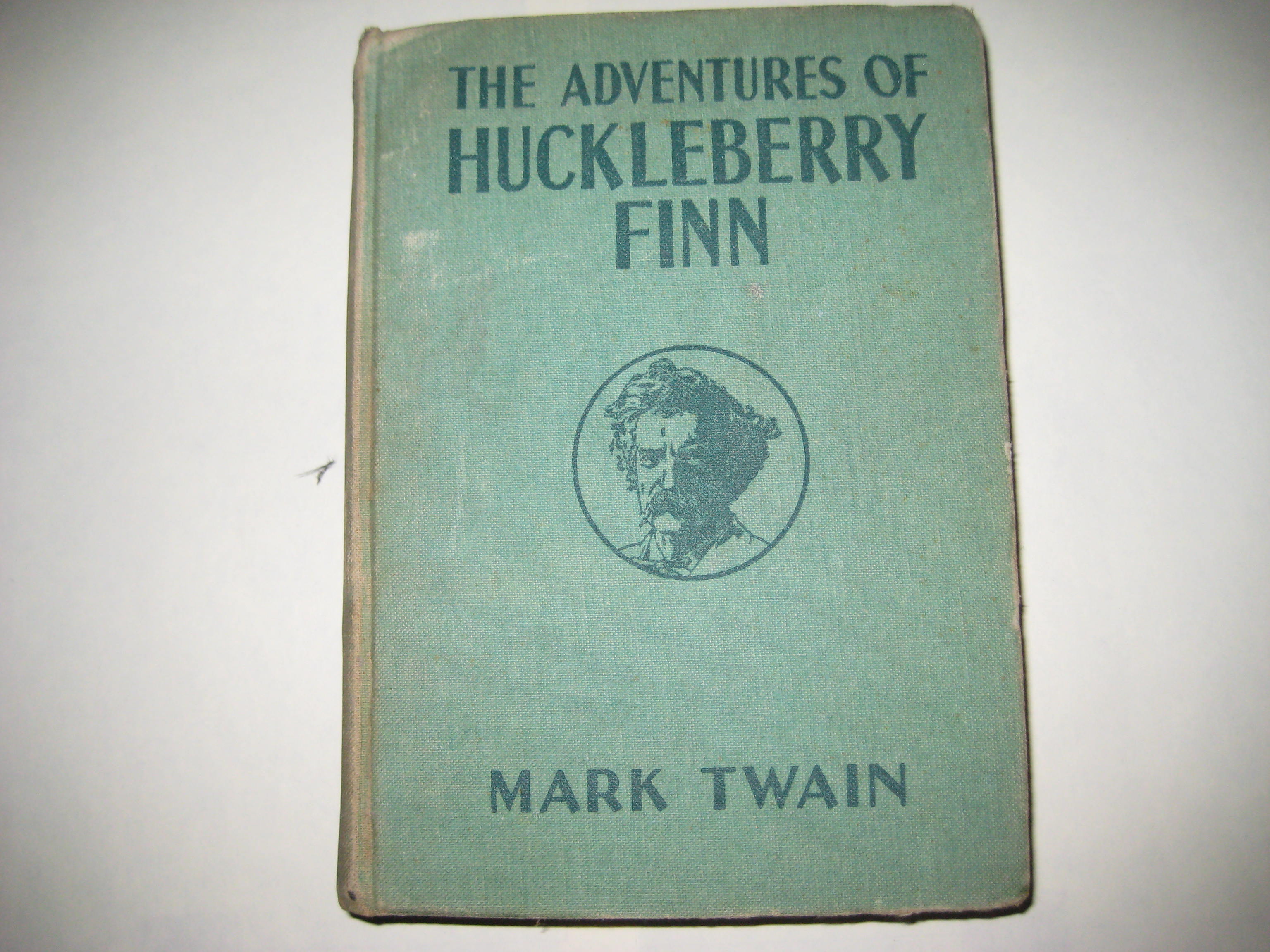
IMG_3110 IMG_3111

Check out the NOTICE in this copy of Huck Finn. I was more than a little concerned about being prosecuted, banished, or shot after reading this in the seventh grade. What made this even more alarming was that I didn’t know what a plot was at the time and maybe not even what a moral was. My copy is from around 1918 and was old even when I first read it. I have no idea how I came to own it.

Leave a comment

Filed under Art and Craft of Writing

Editing Isn’t Fun, But It’s Necessary

I just reviewed the final galley of Truth-Teller Revenge. It looked great with only two small changes. Hurrah. Revenge is still on track for a January release.

Every author should strive to put out an excellent product. That requires an excellent plot and interesting characters. That’s the fun part. A quality book also requires meticulous editing, but poring over a manuscript line by line isn’t fun. I’ve gone half cross-eyed editing since June.

I’ve made a resolution to write cleaner, more typo free books. I’ve seen others in my critique group do it. I’m thinking of you, Laura Henson. One aid I recently learned of is the editing ‘option’ menu under ‘file’ in Word 2010. That will help eliminate some errors.

Unfortunately, some things don’t come easy to me. Word order is a bit of a problem. I blame it all on my dear mother. Inverted word order was natural to her, and sounds natural to me. She in turn blamed it on the Amish neighbors of the family farm in Painesville, Ohio. It just means I have to work a little harder.

Leave a comment

Filed under Art and Craft of Writing, Truth-Teller Books

Anathem: A Sci Fi Novel With An Exceptional Amount Of Science

Anathem by Neal Stephenson is a difficult book to review and at times to read. It’s a thousand page book. There’s a lot to love in it, but other parts fell flat for me. Here’s my take on it without any major SPOILERS.

The protagonist Erasmus, an avout, lives a monk-like existence in a scientific monastery on a world that is Earth-like, but it isn’t Earth. There is minimal contact between the avout in their monasteries and the secular world. What made it a slog is that the reader must negotiate a plethora of strange English-sounding words. Most these words have a meaning similar to something in English, but it takes a while to figure out just what. Nonetheless, the book intrigued me enough that I kept reading.

Stephenson likes his science. Anathem has more pages devoted to science and mathematics than any sci fi book I’ve read. For me, the many problems in logic and scientific descriptions weren’t necessary for the story and often slowed it down. I’m scientifically oriented, but I found myself skimming over portions.

The narrative picks up in the middle of the book. An alien ship is orbiting the planet. The avout and the seculars join together to deal with this possible threat. As a result, Erasmus finds himself on a quest through the secular world, which he is largely ill equipped to deal with. This middle part of the novel was my favorite.

The last third, which could have been a page-turner, became another slog. The alien ship is evidently from one or more parallel worlds or existences. Page upon page was devoted to discussing this. Enough! Someone studying the many-worlds interpretation of quantum mechanical may find this fascinating. I found it tedious and skimmed over large sections. For me Anathem has too much science. I need character, plot, and a gripping narrative.

Ironically, despite Anathem’s strong rooting in science, I found several unrealistic aspects of the novel, which pulled me from my suspension of disbelief. Most of these revolved around the unrealistic roles of Erasmus and his young colleagues in the last third of the book.

Young Cary, Krin, and Oliver in my Truth-Teller books have an impact on the world around them, but they do it in a credible way. Twenty-one year old Luther in Truth-Teller Revenge does assume leadership of the Jacombers, but he does it in his small, religiously charged community.

For being a logically oriented novel, Anathem has other disconnects. I don’t want to give out SPOILERS, but, among other issues, I don’t think the method of signaling the alien ship would have worked.

Anathem seems written for the YA scientific geek. I’m glad I read it, but I think less science and a more realistic plot would have made it a better novel.

Leave a comment

Filed under Art and Craft of Writing, Book and Movie Reviews

Seattle Authors Talk about Amazon and the Challenges of Getting Published

Check out this Seattle Weekly article about Amazon.

http://www.seattleweekly.com/home/955189-129/the-perks-pitfalls-and-paradoxes-of

It includes interviews with Seattle area authors Robert Dugoni, Megan Chance, and Greg Bear about the challenges of getting published. All three are very hard working and determined authors. I’ve heard Robert and Megan speak many times at the Pacific Northwest Writers Association Summer Conference. Greg Bear was the keynote speaker at the same conference a few years ago.

A few takeaways and thoughts:

* Wow, the book industry has totally changed in the seven years since the Kindle came out in 2007. It will change even more in the years ahead, but not in a predictable way. As Greg Bear points out, what is publishable in the e-book format is different from what was possible in the traditional world.

* Amazon’s transformation of the book business has been pretty hit and miss, and has been marked by several failures along the way.

* Amazon Publishing may be shunned by bookstores, but it has a huge advantage in e-books where Amazon is putting its marketing focus behind its own authors. This is making it more difficult on self-published authors and indie presses, like my publisher, Champagne.

* Even if you get a traditional book contract, it’s hard to get the next one.

* E-books have created more opportunities for writers than the traditional publishing business, but it still isn’t easy to establish a readership.

I don’t normally read the Seattle Weekly. I found out about this article from my daily e-mail from PW Daily, which is a free Publishers Weekly e-newsletter. I recommend all serious writers to subscribe to this newsletter so they can better understand the publishing business.

Leave a comment

Filed under Art and Craft of Writing

How Much Science Should a Sci Fi Book Have?

The typical sci fi book should have enough science in it to tell the story, and nothing more.

Conflict, and how the protagonist deals with that conflict, drives most good stories. Science interprets the reality of the world around us. By itself, science has no conflict.

Science is a secondary character in most novels. Devoting pages at a time to a secondary character is usually a mistake. I learned this from experience. When I first submitted Truth-Teller Rebellion to Champagne Press, it came back with a rejection, but with the comment that if, among other things, I wanted to eliminate the excess description (science in most cases) I could resubmit it. Thank you Champagne Press for that second chance. An example given was the two pages I had devoted to a detailed explanation of the construction and operation of a solplane. The editor was right. My two pages on solplanes just slowed down a story that already was a little too slow.

Often, a scientific idea is the spark behind a novel. For example, what if artificial intelligences no longer need mankind? That is the basis of The Fall of Hyperion and 2001: A Space Odyssey. However, what keeps the reader turning the pages in these classics is how the protagonist deals with this obstacle, not the science of artificial intelligences.

I recently read Anathem by Neal Stephenson. I admire this book for its originality, but the science of this book slowed it down. Anathem’s thesis centers on the many-worlds interpretation of quantum mechanics, MWIQM, which is roughly akin to the parallel worlds that inhabit many sci fi novels. I read the first discussions of MWIQM with care. However, there were more talking head discussions about MWIQM for pages at a time. I skipped over them all. Some quantum mechanics geeks might like these interruptions to the story, but they are a fine slice of the reading public. I suspect most readers will react as I did.

Putting science in a novel in most cases means more description. I like to get poetic with my descriptions. It pleased me that longandshortreview.com said in its review of Truth-Teller Rebellion that “Mr. Schultz’s scenery descriptions are not to be missed.” I was flattered, but that doesn’t mean I should write more and longer descriptions. When I’m writing my best, my descriptions mesh seamlessly with the dialogue and action.

Science is important to science fiction, but unless you want only hardcore science geeks for readers, keep the science short and sweet.

Leave a comment

Filed under Art and Craft of Writing, Truth-Teller Books

It’s Been a Hectic Month of Editing and Toddler Sitting. Which Makes Me Wonder: How Parents Find Time to Write and Raise Kids

I received the Truth-Teller Revenge galleys from my publisher for the final proof a little over a month ago. I went through them, and then my meticulous and wonderful wife caught everything that I hadn’t. There was a lot to catch and only ten days to do it in. I can’t believe I read “grim” for “grime” multiple times. It goes to show how difficult it is to edit one’s own book. After a discussion with my publisher, Truth-Teller Revenge will come out in January 2015, instead of this November. At the cost of a two-month delay in publishing, it will be a much better book.

Closely following the final edit of Revenge was the birth of our second grandchild, a lovely little girl who needed a little extra time at the hospital before coming home. While Mommy and Daddy were beside her at the hospital, my wife and I cared for our two-year-old toddler grandson for ten days. This experience gave me a greater appreciation for the time, energy, and attention it takes to raise children. Now that our granddaughter is at home getting settled with her family, I will be getting back to writing and blogging.

My hat is off to all you parent/writers. I don’t know how you do it!

Leave a comment

Filed under Art and Craft of Writing, Truth-Teller Books

Truth-Teller Revenge Cover Art

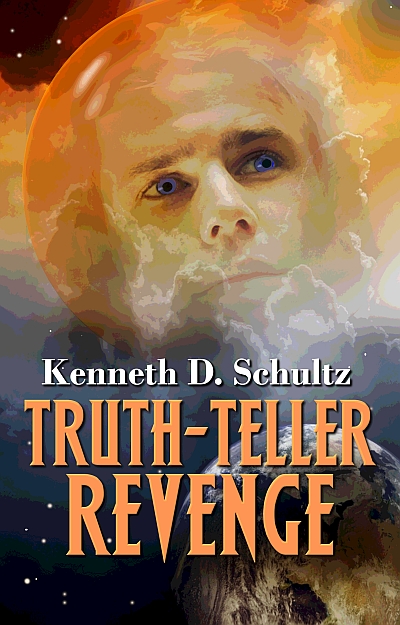
TruthTellerRevenge-Ebook cover

I just received the cover art for Truth-Teller Revenge. It is fantastic! The artist is Trisha FitzGerald, who also did Truth-Teller Rebellion. Yes, Cary does get off the Earth in Revenge…although, getting back is a bit of a problem. I’m doing the final final edit of the galley right now. Revenge is on track for release in November.

Leave a comment

Filed under Art and Craft of Writing, Truth-Teller Books