Fact and fiction in Magellan’s Navigator

Magellan’s Navigator sticks closely to the known facts of Magellan’s voyage. The dates are accurate. Every person named, with one exception, did have a part in the first circumnavigation of the world. There was a master gunner named Andrew who was from Bristol and who died of scurvy soon after leaving Guam. However, Andrew’s wife, Ana Estrada is my invention. On the other hand, Fidelia was Ginés’s wife and believing he was lost, she did remarry before he finally returned.

I used Albo’s logbook to fix the time and place of the fleet during its voyage. Antonio Pigafetta’s Report on the First Voyage Around the World gave me an eyewitness report of the people he met and the places he saw. My descriptions of the rajahs Humabon and Almanzor are from Pigafetta’s book. Also borrowed from Pigafetta are the lengthy lists of gifts to the rajahs. I am indebted to the late Tim Joyner for his book Magellan. His meticulously researched book uses Spanish and Portuguese sources, unlike many other books about Magellan. His fleet rosters are by far the most complete I’ve seen.

So what is fiction? I really don’t know because the events as told in Magellan’s Navigator are both plausible and possible. Historical sources contradict one another about the details of some events, like the mutiny. For example, while my explanation of the San Antonio’s capture during the mutiny can’t be proved, it also can’t be disproved. It is known that for some reason one of the mutineer ships floated helplessly to Magellan’s ships, and Albo could very well have been responsible for that happening.

I did have to simplify things by focusing on a limited number of crewmembers. I did that after early drafts thoroughly confused readers when I included all Albo’s shipmates. I apologize to Leone Pancaldo and the others who deserved to be mentioned, but had to be excised from the story for readability.

One issue I’d like to address is Albo’s ethnicity. Wikipedia lists Albo as being from Rodas, Spain. This is questionable. The Spanish roster simply lists Albo as being from Rodas with a birthplace of Axio. This is consistent with my having Albo being born in Thessaloniki on the Axios River in Greece, and his being most recently from Rhodes (Rodas.)  Roses is evidently an alternative spelling of Rodas. There is a small port of Roses in Catalonia, but I see no associated place name of Axios, which argues against Albo from being there. Andre Rossfelder’s In Pursuit of Longitude  makes the argument that Albo was from Roses, but concedes  he does not know whether Albo was Greek or Spanish. Numerous Portuguese and Spanish historians over the centuries have called Albo a Greek, so I went with the preponderance of opinion. In addition, S.E. Morison in his The European Discovery of America, the Southern Voyages cites a source that claims a survivor of the circumnavigation sailed with Piri Reis, the Ottoman admiral. We know what happened to most of the survivors afterward, except for Albo, who disappears from history. His being from Greece is consistent to his returning to the eastern Mediterranean and working with Piri Reis.

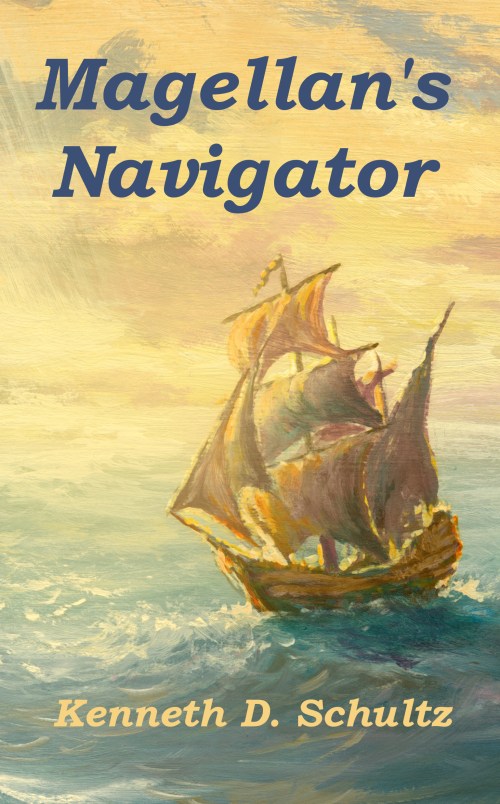
I hope you enjoy Magellan’s Navigator. It is available in print and paperback on Amazon. Just click the photo above.

Leave a comment

Filed under Art and Craft of Writing, Magellan's Navigator, Uncategorized

Here’s What Happened to the Rajah Almanzor and Others in Magellan’s Navigator

Here’s what happened to the Rajah Almanzor, Cano, Espinosa, and other characters after they left the pages of Magellan’s Navigator. 

Rajah Almanzor – Rajah Almanzor’s fears were realized when the Portuguese and their Ternate allies joined forces and attacked Tidore. The Rajah Almanzor fled into Tidore’s mountains. The Spanish did send a second Armada to the Moluccas with Cano as its Pilot Major. Only one ship from this Armada, the Santa Maria de la Victoria, arrived in the Moluccas during 1526. (See Cano below.) Nonetheless, these Spanish were enough to leave the Portuguese and Ternate balanced against the Spanish, Tidore, and the Rajah of Bacchian. This stalemate ended when Emperor Charles V on April 23, 1529 relinquished all claims to the Moluccas for 350,000 ducats in the Treaty of Saragossa. The Emperor Charles was desperate at this time for money to support his European empire. (Therefore, because Portuguese King Manuel refused to pay Magellan a half ducat per month stipend, causing him to go to Spain, his successor King João III ended up paying 350,000 ducats.) The Portuguese and Ternate then overwhelmed Tidore. Almanzor fled to his larger ally, the Rajah of Bacchian. His final fate is not certain, although one account has a Portuguese physician poisoning him.

Juan Sebastián el Cano – Cano received many honors from King Carlos. Nonetheless, he had domestic problems with children from two different women. There is a record of a petition to King Carlos for a guard because of threats to his life. In 1525 Cano was Pilot Major of the Loaísa’s seven-ship fleet to the Spice Islands, the first fleet to retrace the track Magellan had blazed. He was also captain of the Sancti Spiritus. The crew of this fleet was predominantly Basque, which should have led to a more cohesive fleet than Magellan’s armada. Cano’s piloting skills were not up to the task. He was initially unable to find the entrance to the Straits of Magellan and once he did find the straits, a storm wrecked his ship. Of the six remaining ships, one deserted in the straits. It wrecked off Brazil. Sebastian Cabot rescued a few of its survivors. (See Michael de Rodas.) A storm blew another ship out of the strait into the Atlantic, where it vanished. Cano took four and half months to navigate the straits, as compared to five weeks for Magellan.

Once in the Pacific Ocean a storm separated the four remaining ships. One was lost, another, the smallest, managed to reach Mexico. The flagship, with Loaísa and Cano proceeded alone. Scurvy took a high toll in the voyage across the Pacific. Loaísa died first. Cano died a week later two-thirds the way across the Pacific. The flagship reached Tidore with around a hundred men. The fourth ship managed to sail to Mindanao in the Philippines, where it wrecked. Three of its men survived.

Magellan’s fleet had its difficulties, but it fared much better than this second fleet. This is true even considering Magellan was sailing into the unknown, while Cano’s fleet had the knowledge of Magellan’s voyage. Magellan’s success is a testament to his skills and preparation, and Cano’s lack of them.

Rajah Checchili of Ternate – Prince Checchili had an uneasy peace with the Portuguese. Tensions rose after the Portuguese constructed a fort on Ternate. The Portuguese took several of Prince Checcili’s younger brothers as hostages in the fort along with his mother. Prince Checchili died childless in 1529, likely another victim of poison.

Pilot Major Estéban Gómez – Despite the questionable circumstances of Pilot Gómez’s return with the San Antonio, he remained employed as a pilot for the Casa de Contratación. In 1524, he searched for a northwest passage to the Indies. He sailed along the coast of North America from Florida to Canada, but returned in 1525 with no success. He then became a West Indies slaver. In 1535, he was a pilot on the Mendoza expedition to the Rio de la Plata. The last written record that mentioned him is in 1537 at the Rio de la Plata. At that time, he was old for the times at fifty-three years of age.

Gonzalo Gómez de Espinosa – Espinosa was first held prisoner in the Moluccas, but then transferred to Cochin, the hub of Portuguese India. Da Gama had returned to India as viceroy. He was not about to let the Spanish interloper free. After da Gama’s death, Espinosa was allowed to depart for Lisbon with the Ginés Mafra and Hans Bergen, only to be thrown in prison on their arrival in Lisbon in July, 1526. Hans Bergen died there. Espinosa was released in early 1527 after the personal intervention of the Emperor Charles V with his now brother-in-law King João III of Portugal. Espinosa was reunited with his wife after eight years apart. Emperor Charles received him in May, 1527 and granted him a pension in reward for his services. After the usual Spanish bureaucratic snafus, this started in 1529. He also inherited the small estate of Hans Bergen who had died when in prison with Espinosa in Lisbon. The last known record of Espinosa is in 1543, when at age sixty he was living in Seville.

Ginés Mafra – He was one of the four survivors of the Trinidad to return to Spain. He was released from a Portuguese prison in 1527 after his papers, including all the Trinidad’s roteiros were confiscated. He had an audience with the Emperor Charles V and then returned home to find his beloved wife Fidelia had remarried. She had sold his house and all his property.

A few years later Ginés returned to the sea. In 1536, he was pilot major of a fleet in the Pacific Ocean operating from the Americas. Ginés sailed as a pilot in a six-ship expedition bound to Asia from Mexico. The expedition discovered many islands and gave the Philippines their current name. None of the ships and few of the men ever returned to Spain. There is no record of Ginés Mafra returning and he is presumed one of those lost, but how, where, and when is not known.

Manual – The Spanish scribe Herrera writes of a Moluccan on the Victoria: “One of these was so sharp, that the first thing he did was to inquire how many reals a ducat was worth, and a real how many maravedis, and how much pepper was given for a maravedi; and he went from shop to shop to get information of the value of spices.” This had to be Manual. He had learned too much, and, unlike his countrymen, was not allowed to return to his homeland.

Álvaro Mezquita – This somewhat inept cousin of Magellan was released from prison in 1522, upon the return of the Victoria. He returned to Portugal.

António Pigafetta – Pigafetta was miffed at not being one of the two chosen to accompany Cano to the first audience with Charles V. Pigafetta went to the Emperor Charles V’s court on his own and presented him with his written record of the circumnavigation of the globe. No record remains of this book. He was paid his wages in arrears and his share of the Victoria’s cargo. He then went to visit the Portuguese King João III, followed by King Francis in France, where he presented another book to his fellow Italian, the Queen Mother, Marie Louise of Savoy. He returned to his home in Vicenza, where he recreated his book for publication. He completed it in 1524 in Rome, where he was invited to an audience with Pope Clement VII.

Pigafetta then became a knight-errant of the Order of Saint Rhodes and vowed to defend Christianity from the Moslem Turks. At this point, the written record ends. He is believed to have died as a member of the Order fighting the Turks.

Pigafetta’s original folio is lost. Four copies are left. Three are in French and one in Italian. There are differences between the four, as might be expected as they were copied and mistakes when made translating from Italian to French. Albo’s log gives a much more precise, but sparse, description of the voyage. Pigafetta gives a much more in-depth description of the people, places, flora, and fauna that he encountered. He does lapse into fanciful travelogue recounts of tall tales told to him by natives during the voyage. His folio also suffers from being written after the fact, which introduces some inaccuracies as to the timing of some events. His account is remarkable in that very few members of the crew are mentioned by name other than Magellan. Cano is not mentioned.

Giovanni de Polcevera – Polcevera, along with Espinosa, Ginés, and most of the other surviving Trinidad sailors were taken from Ternate to Cochin, India in 1525. Permission to return to Europe was denied them. Polcevera befriended some fellow Genoese sailors in the service of Portugal in late 1525, and sailed for Lisbon. He was discovered by Portuguese officers and put ashore in Mozambique. There he remained with little food or clothing until he died of disease in Mozambique in 1526 at age fifty-eight.

Michael de Rodas – Michael sailed in 1525 as Pilot Major of a fleet to the Moluccas under Sebastian Cabot. Michael’s appointment was made by King Carlos over the objections of Cabot. Cabot was a prickly character who got along with few people. He marooned Michael on an island off Brazil along with Martín Méndez, the clerk of the Victoria. Both are believed to have died attempting to reach the mainland.

Tupas – Tupas became rajah of Cebu upon Humabon’s death. He was still rajah in 1565 when Michael López de Legazpi’s expedition reached Cebu. Tupas resisted Legazpi, but his men were overwhelmed by superior Spanish firepower. Tupas survived to negotiate a treaty. His defeat marked the beginning of the long Spanish occupation of the Philippines.

Get Magellan’s Navigator on Amazon. It’s free with Kindle Unlimited, $4.99 for Kindle, and $9.99 for paperback.
 

Leave a comment

Filed under Magellan's Navigator

Magellan’s Navigator, a crafty Greek named Francisco Albo

Magellan’s Navigator is my most recent book. It’s a meticulously researched tale of the first circumnavigation of the globe as seen through the eyes of Francisco Albo, who navigated the sole remaining ship of Magellan’s fleet halfway around the world. Sail along with Albo through storms, mutinies, and the intrigues of native rajahs.

Buy it in print or ebook at Amazon: http://amzn.to/2i46ZZw

magellan-kindle-113016

Leave a comment

Filed under Magellan's Navigator

My Truth-Teller Books Are in Paperback!

truth-teller-rebellion111016-kindlett-revenge-cover-111016-kindle

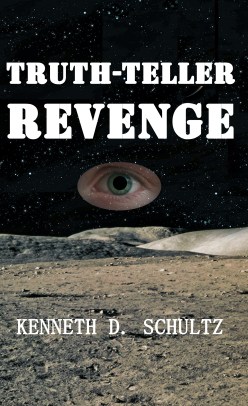
Truth-Teller Rebellion and its sequel Truth-Teller Revenge are now available at Amazon in paperback, as ebooks, and free with Kindle Unlimited. Truth-teller Cary and his empath sister Krin use their unusual talents to fight against the dictator Perez…first to survive in Rebellion and then to defeat him in Revenge.

For Truth-Teller Rebellion click http://amzn.to/2gLRTYi.

For Truth-Teller Revenge click http://amzn.to/2h0j6qG.


Leave a comment

Filed under Truth-Teller Books

Genius, a movie about Maxwell Perkins and Wolfe

Genius, a movie about the great editor Maxwell Perkins (think Fitzgerald, Hemingway and more) and Thomas Wolfe is coming out. That will be a must see for me. If such things interest you, the following link will be of interest.

http://www.publishersweekly.com/pw/by-topic/authors/interviews/article/70466-four-questions-for-max-perkins-biographer-a-scott-berg.html?utm_source=Publishers+Weekly&utm_campaign=2edddcb834-UA-15906914-1&utm_medium=email&utm_term=0_0bb2959cbb-2edddcb834-304609113

Leave a comment

Filed under Art and Craft of Writing, Book and Movie Reviews, Uncategorized

The Serious Side of Whiskey Tango Foxtrot and Arturo Perez-Reverte’s The Painter of Battles

Tina Fey is my favorite comedic actress of this era, and she does a superb job in Whiskey Tango Foxtrot. There is, however, a serious side to virtually every laugh in the movie. The unintended results of the press are an important part of the film. Like the uncertainty principle, where the act of observing affects ‘reality,’ the act of reporting, especially reporting war, can affect the lives of all involved. I can’t say more without giving out spoilers.

These issues are at the heart of Spanish author Arturo Perez-Reverte’s The Painter of Battles. I’m a huge fan of Perez-Reverte. He’s mostly an author of historical fiction including his Captain Alatriste series and The Fencing Master. His contemporary The Dumas Club was made into a The Ninth Gate starring Johnny Depp. These are all fast paced, tightly plotted books.

Perez-Reverte was a war correspondent, like the Tina Fey character in Whiskey Tango Foxtrot, before becoming an author. The Painter of Battles appears to be his attempt to deal with the atrocities and cruelty of man against man he encountered in his journalistic career. It is a very philosophical novel, and quite different from his other works.

The protagonist, the painter of battles, was a war photojournalist for over thirty years. He has abandoned this profession and, when we first meet him, is painting a mural of battles in a tower on the Spanish coast. One day a former Croatian soldier arrives at the tower, and announces that he is going to kill the painter of battles, although first the visitor wants to talk. A series of philosophical discussions then ensues about war, journalism, mankind, and what drove these two men to this destiny. It would seem Perez-Reverte is processing specters haunting him from his years as a war correspondent.

The Painter of Battles was at times too verbose for me, and it wasn’t my most enjoyable read of the past year. However, I’ve certainly thought more about this book after finishing it than any other I’ve recently read.

2 Comments

Filed under Book and Movie Reviews, Uncategorized

My First Take on the Pros and Cons of Scrivener

There’s more to writing a book than putting simply putting words into digital memory. Most novels have characters, plots, settings. Nonfiction books often have even more things to juggle. In the past for me, that’s meant each work-in-progress folder contains separate Word, Excel, and other documents. That’s cumbersome. If I forget the color of my Otto’s eyes, I have to leave my manuscript and search for the Otto character sheet, which slows down the writing process. This has become more important to me now that I have multiple books in the same science fiction universe.

Scrivener solves this organization problem by “binding” together your manuscript and various source documents so you can complete that “awkward first draft.” One, not multiple, mouse clicks will bring up any document you want.

I’ve now worked a bit with Scrivener and have a preliminary assessment.

Pros: The one click organization is a huge plus, although it takes some effort to get everything into the Scrivener software. The software also helps in the organization of your manuscript and makes it easy to move chapters around. This will probably be of more use to seat-of-the-pants writers as opposed to writers, like myself, who plot out their novels beforehand. It’d also be very useful to non-fiction writers.

Another pro is the cost. Scrivener regularly goes on sale, and with a little persistence you should be able to buy it for around $20.

Cons: There is no editor and I miss it. I personally try to write a reasonably clean first draft and appreciate Word flagging my misspellings, passive sentences, and grammatical monstrosities. However, for writers who focus on simply getting words to paper in the first draft, the lack of an editor may not bother you.

How I plan on using Scrivener? I think I’ll still do my manuscripts in Word. However, I’ll use Scrivener to organize all my background information. I’ll bring up Scrivener before I start to write, so then my character sheets etc will be at most two clicks away for reference. If I were writing a nonfiction book, I’d probably try doing the manuscript in Scrivener.

However you use it, Scrivener is well worth the money.


Leave a comment

Filed under Art and Craft of Writing, Uncategorized

Across a Billion Years by Sci Fi legend Robert Silverberg

Across a Billion Years is a first contact novel written by sci fi legend Robert Silverberg back in 1969. It’s interesting how some sci fi holds up well over the years, while other sci fi falls apart. Dune, for example, reads as well to me today as when I first turned a page in it forty plus years ago. It’s setting in a rather fantastical future helps. Sci fi that is more predictive, like Across a Billion Years, can more easily become book wormed with age. Fortunately, Across a Billion Years generally escapes this fate.

The year is 2375. Mankind has fast interstellar propulsion and interstellar communication via telepathy. (Space Sci fi requires both in some form or the author is severely limited.) The protagonist Tom Rice is a newly minted college graduate on an archaeological expedition to dig for artifacts on Highby V relating to The High Ones, who left their mark across the galaxy a billion years earlier.

The discovery of artifacts propels the plot as they attempt to discover the fate of The High Ones’ civilization. A subplot is the internal strains within the team brought on by racial tension between its five humans, five other alien races, and one human android. Another subplot concerns Rice’s romantic interests. Rice is initially quite naïve, and, although he doesn’t realize it, pretty opinionated and bigoted. He shows quite a bit of character development over the course of the novel.

The novel is presented as Rice’s communication to his sister as stored in a memory cube. That wouldn’t be my preference, but it works reasonably well.

The plot and subplots worked for me as did Rice’s character development. However, the book is more contemplative than action-packed. I thought the book floundered some at the end, and found the ending not satisfying. The secondary characters were rather lightly drawn, and more caricatures, than characters. I was particularly disappointed that the androids persona was explored more. Some of the science that was cutting edge in 1969, and that Silverberg spends many words on, is obsolete today, and not of interest to the modern reader.

Overall, the book was a quick read for me at 232 pages and maintained my interest. I rate it four stars considering its vintage. If it were modern, I’d knock it down a star. Personally, I think its regular Kindle price of $7.99 is too high, but I purchased it on sale via BookBub.

Leave a comment

Filed under Art and Craft of Writing, Book and Movie Reviews, Uncategorized

BACKSTORY: INTRIGUING OR BORING?

writing clipartI like to write characters, or read about characters, with a rich backstory. I know writers who construct elaborate backstories for all their major characters. The question is then how, or even if, this backstory is revealed to the reader. I think this is best done slowly

That’s how Brandon Sanderson does it in his sprawling, wondrous Stormlight Archive series. He has two main protagonists Kaladin, an enslaved warrior, and Shallan, a minor noble lady with a gift for drawing. Sanderson’s treatment of them was masterful. When I finished a chapter, I never knew if the next page would carry the story forward, or reveal a peek at Kaladin or Shallan’s past. While I wanted to know what the future held for these characters, I also wanted to know what had led to Kaladin becoming a slave and Shallan who she was.

By comparison, I recently started the first book in science fiction epic series, which will remain unnamed. One chapter consisted of a two-page data dump of the character’s backstory, and then a page of largely forgettable action not essential to the overall story. Soon afterward, I gave up on the book for this and other issues despite liking the co-protagonists. Please, authors, don’t dump backstory on me. Tease me with it little by little.

Backstory fascinates me so much that I made it the crux of my upcoming book Mindfield. In it, the reader and the protagonist will discover his backstory at the same time.

Leave a comment

Filed under Art and Craft of Writing, Mindfield

Looking Back at a Year of Writing

For me 2015 was a good year for writing.

In a nutshell:

Over 100,000 net words written
One book published: Truth-Teller Revenge
One book completed: Magellan’s Navigator
One book in beta edits: Mindfield.

Writing:

2014 was a year of learning how to edit and hone my craft. For this I give thanks to my traditional publisher’s editor. I spent 2015 using my improved craft.
The year started out in a frustrating way. My trad publisher punted the copy editing of Truth-Teller Revenge, so my wife Teresa and I edited it under a tight deadline. That completed, I rewrote my first novel, a historical fiction work about Magellan’s voyage of discovery. That book represented several years of research that I wasn’t willing to flush. Originally, this book was 120,000 words, had multiple points of view, and was too boring. I rewrote the book as an 80,000 word “discovered” memoir of the armada’s navigator and am now proud of it. That took until summer, when it went off to my wonderful beta-readers Dave, Kerry, and Laura. In the fall, I reedited it based on their recommendations. I’m now flogging it to agents as Magellan’s Navigator.
I conceived Mindfield in February, thanks Pam for the title, and started writing a few months later. I had a decent draft by October and edited it through year-end. It’s now in the hands of my beta readers. Final editing will start soon. I’m excited about this book. It’s my best book of the six I’ve written.

Publishing and Promoting:

I made a few baby steps in learning the world of publishing and book promotion. It began in frustration. Truth-Teller Revenge, which as a traditionally published book I have no control over pricing, bombed. I discovered promoting on my blog and to Facebook groups doesn’t cut it. My self-published thriller Download substantially outsold and outearned Revenge even though I had Download at a lower price point.
A glimmer of hope came when an author friend, Ann Roth, got me into an indie publishing Facebook group. What an education. Thank you, Ann. I’m now much better equipped to navigate the publishing world, be it traditional or self-publishing. It’s still a steep mountain to climb, but now I know where the path is and what boots to wear.
This year I’ll write Mindfield’s sequel and get Mindfield and Magellan’s Navigator published. It should be another fun year.

Leave a comment

Filed under Art and Craft of Writing, Download, Magellan's Navigator, Mindfield